In a US retirement scenario, a surviving spouse files jointly for the year of death, then files as single unless a dependent child qualifies.
In the example, lower deductions and narrower single-filer tax brackets mean the survivor pays higher federal income tax despite receiving less cash income.
Converting traditional IRA funds to a Roth IRA while both spouses are alive can use joint brackets and deductions, potentially reducing future taxable withdrawals.
Each conversion adds taxable income, and it can also make more Social Security benefits taxable, so couples should consider both effects when planning.
Other planning options include delaying the higher earner's Social Security claim and holding bonds in an IRA while keeping stocks in a taxable account.
-
Survivor Taxes Can More Than Double
-
Staying Put Can Protect Retirement Wealth
Selling a long-held $900K home bought for $150K can trigger ~$37.5K in federal capital gains tax, before added Medicare surcharges or any state taxes.
With a paid-off home and a ~$75.2K budget, a couple could need roughly $875K to $1M invested after Social Security to cover remaining costs.
Relocation math often misses taxes: a large unrealized gain can stay sheltered by keeping the house, and some comparisons show little of that edge.
Widowhood can raise the stakes: after a 2-yr window, the same sale can leave far more gain taxable, while heirs may inherit a stepped-up value.
Delaying Social Security changes the picture most, and if a sale becomes necessary, timing around a spouse’s death can shift the tax bill sharply. -
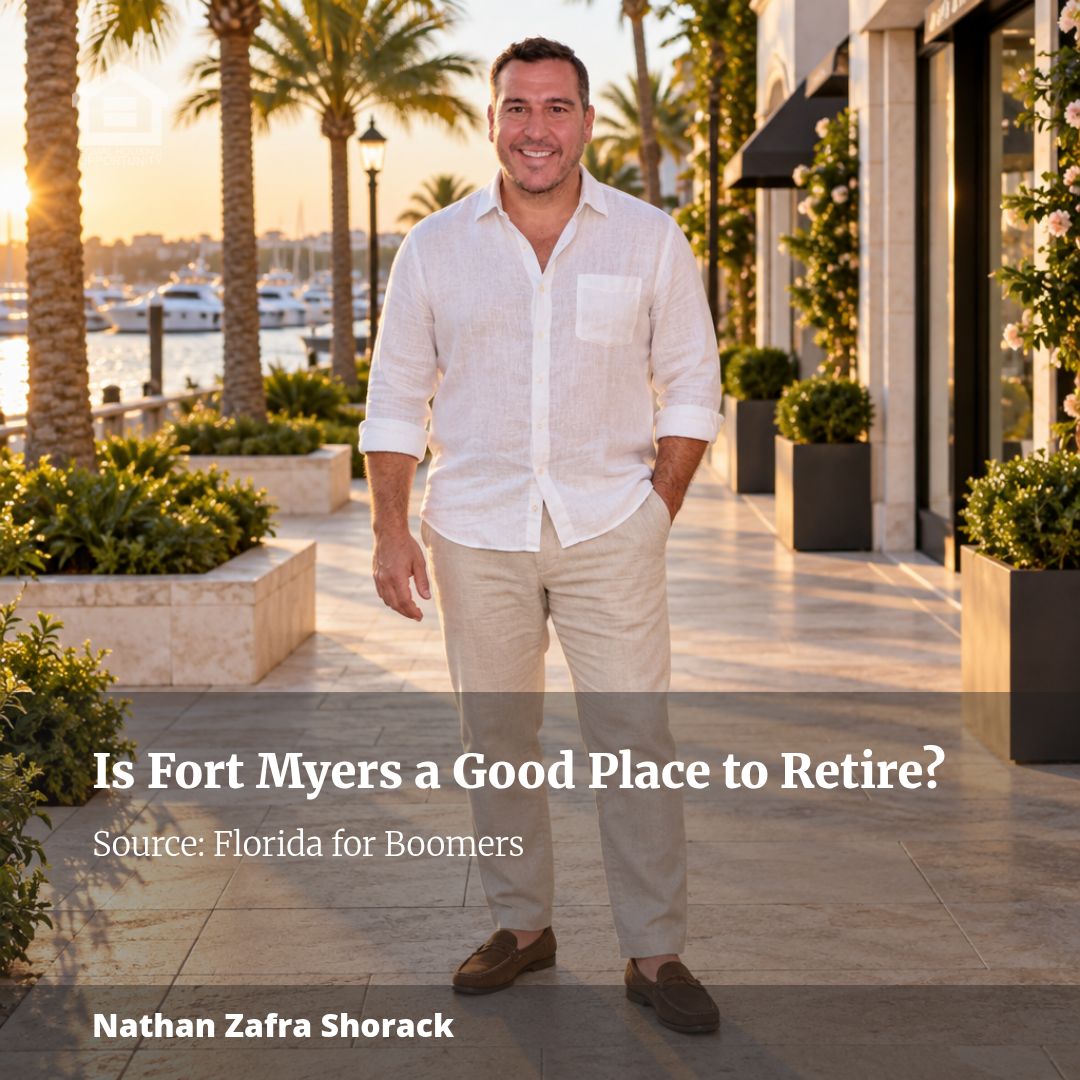
Is Fort Myers a Good Place to Retire?
Fort Myers is a top retirement destination in Florida, offering great weather, affordable living, stunning beaches, golf courses, and vibrant dining and shopping. Notable 55+ communities include Valencia Harbor, Verandah, The Shores at Brightwater, Del Webb Oak Creek, and Babcock Ranch, featuring resort-style amenities, active lifestyles, and diverse housing options. The area boasts a rich history, year-round warm climate, and a cost of living below the national average.
Continue to full article -
Business Owners Can Shelter >$200K Annually
For 2026, pairing a cash balance plan with a 401(k) can create six-figure deductible contributions for older, high-income business owners with stable cash flow.
2026 Combined Contribution Examples
Age 50: $277K total
Age 55: $333K total
Age 58: $374K total
Age 62: $442.25K total
Contributions are not fixed. An actuary sets required funding toward retirement targets, so owners in their 50s and 60s can contribute more.
Plan assets sit in a trust, but employers bear investment risk. Underperformance can require higher funding, so conservative allocations may reduce volatility.
Best-fit users are solo practitioners or small firms with steady income, few employees, and enough reserves to meet required contributions in lean years. -
Business Owners Can Shelter >$200K Annually
For 2026, pairing a cash balance plan with a 401(k) can create six-figure deductible contributions for older, high-income business owners with stable cash flow.
2026 Combined Contribution Examples
Age 50: $277K total
Age 55: $333K total
Age 58: $374K total
Age 62: $442.25K total
Contributions are not fixed. An actuary sets required funding toward retirement targets, so owners in their 50s and 60s can contribute more.
Plan assets sit in a trust, but employers bear investment risk. Underperformance can require higher funding, so conservative allocations may reduce volatility.
Best-fit users are solo practitioners or small firms with steady income, few employees, and enough reserves to meet required contributions in lean years.